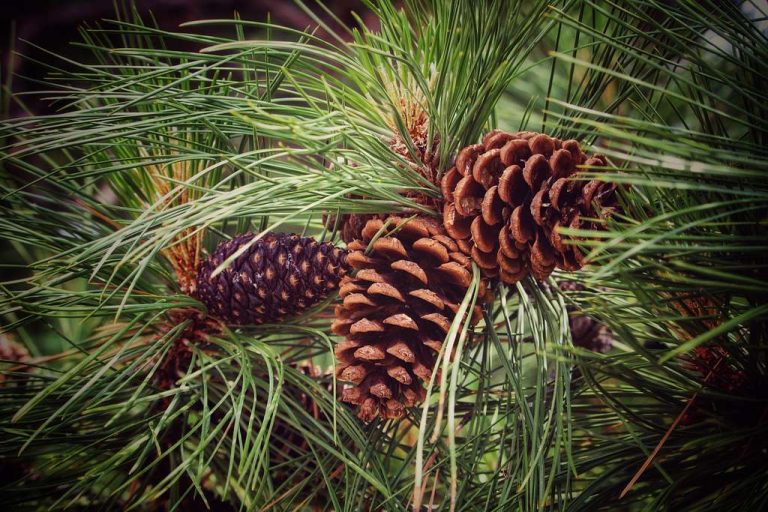
Sometime in the spring of 1840, one Ponderosa pine tree seed, enveloped by a thin organic sail pod, floats on the wind, carried far from its parent. Catching a gust, reaching a height high above the treetops, gravity eventually propels it to a resting place. Hundreds of meters North of Hansen’s channel, once known as Blind Snipe channel, the seed falls into the soil and sand just above the foreshore on the west side of Wasa lake.
At germination, the seed’s life energy erupts, sending shoots in both vertical directions. The young sprout manages to survive growing seven and a half centimetres (3 in.) tall in the first year while generating a sixty-one centimetre (24 in.) taproot below ground. Eventually this sapling will become a mothertree to the surrounding forest.
Year after year, the pine drives the central shaft deep into the sandy gravely soil. The root ball provides the foundation on which will tower, over 170 years in the future, a massive 11-tonne (25,000 lb.) Ponderosa pine, the top unseen high above where the wind breathes.
The Ponderosa embraces Mother Earth claiming new tree-itory for its journey to the father.
In a time before the Ktunaxa’s ancestors made their way into this part of the East Kootenay, the majestic and mighty Ponderosa occupied the territory, carpeting the valley floor and mountain sides. Over 10,000 years, it has played a central part in the forest’s symphony.
The Ktunaxa call the Ponderosa pine tree himu.
To English settlers, it’s Pinus ponderosa. Latin for heavy, weighty, significant. People call it by many names: bull pine, black-jack pine and western yellow pine. It also goes by nicknames like long-leafed pine, red pine and pondo.
Unafraid to strike its head on the ceiling of the sky, these towering forest sentinels provide homes and sustenance to many life forms, small and large. Seeds, cones, needles, sap, wood and bark supply a buffet to animals, birds, insects, larvae, and fungi. Fallen comrades continue to filter the rain and nourish the land.
With a stroke of mighty wings, the magnificent bald eagle launches from Ponderosa spires, gliding out over the lake, suddenly plunging downward; lance-sharp, diamond-hard talons slice through the glassy surface, snatching a fresh catch of Sushi.
The Ktunaxa cultivate many uses for the ponderosa. The inner bark provides medicinal ingredients and, during a short time in Spring, becomes a sweet treat. Seeds turn into snacks. Needles steeped for tea, the long green ones are braided together, then woven into small baskets or dolls, eventually drying beige.
The massive trunks become dugout canoes. The pitch waterproofs moccasins and other items. Mixed with bear grease, the ointment soothes inflamed eyes and sores. In times of food emergencies, boiled young reddish-brown cones provide nourishment.
A Ktunaxa summer camp, Yakikats, was located at Wasa lake. Wasa means horsetail rush, a long slender green stem with a small brownish head that grows in standing water. As a place, the Ktunaxa call Wasa, ?aqnis. When the Chief and warriors ventured East through the Rockies to the prairie grassland traversing one of twenty-six known routes, the women and children lodged at Yakikats.
At the tender age of six-years (1846) and barely three centimetres[RH1] (1 in.) in diameter, the Ponderosa and surrounding coniferous forest watch the U.S. and British draw a line on a map.
The trees and Ktunaxa ignore it.
The Wasa pine continues unmolested day by day, year after year climbing an invisible ladder toward the vast cerulean sky ringed with stalagmites of granite pushed high by earthly forces.
For the next 17 years it grows, absorbing the sun’s radiation, slurping nutrients from the soil and turning them into wood, sap, bark, needles and cones. The continuous shedding of needles creates a spongy, thick organic carpet that obscures the rocky understory. Eventual decay turns matter into black, arid, acidic soil that supports sprouting grasses.
In late Fall 1863, the pine, now eight centimetres in diameter, casually spots a group of miners pass nearby following a Ktunaxa trail south toward Galbraith’s Ferry, which would later be called Ft. Steele. While camped at the mouth of Wild Horse Creek (originally Stud Horse Creek), these prospectors pan for and find gold. Placer gold, yellow metal, the devil’s coin.
The next Spring, hundreds of miners push into the Wild Horse, moving further up the creek to Fisherville, a bustling metropolis of 5,000 by the following year (1865). The lure of Jason’s fleece attracts miners, fortune seekers, merchants, settlers, grifters and ne’er-do-wells. All of the shacks, houses, stables, numerous restaurants, one brewery, six general stores, four saloons, and the provincial jail were built from Ponderosa pine.
The forest and Ktunaxa would never be the same.
Swede Nils Hanson arrives at Wasa in 1885 and starts a sawmill. Over the next 20 years, he turns an area south of the lake into a resort with the district’s best hotel, constructed with Ponderosa pine. In January 1901, Hanson and a crew of 19 men start work building the first bridge, a drawbridge, across the Kootenay River at Wasa. The sturdy ponderosa was milled and used for the pilings, superstructure and roadbed.
Weather-beaten, washed bare and smooth, sun-bleached almost white, one post from that bridge still remains. It takes the high mark of June for it to be lost below the muddy water stained by mountain freshet.
Higher, wider, year after year, yet barely visible to the human eye, the Wasa pine swells and stretches, bulking up for the marathon ahead.
When the mother-tree celebrates 47-years and a thirty-centimetre diameter, it stands a silent vigil, witness to the Ktunaxa / ?aqam uprising of 1887.
?aqam Chief Isadore, passionately and articulately, challenges the Provincial government over the size of the proposed reserve land and the sale of Joseph’s Prairie, now called Cranbrook. Tensions grow, escalating close to war after Kapula, a Ktunaxa warrior, is incarcerated in March 1887 at the Fisherville jail charged with the murder of prospectors William Kemp and Mathew Halton (in 1884).
Days later, Chief Isadore and twenty-five armed warriors ride into town. They break open the gaol doors, releasing their brother from the pine-walled palace of chains. At the same time, Isadore orders two provincial officials, Constable Anderson and the Honourable Fred Alymer, to leave the district and never return. Frightened for their lives, they make haste.
These events push the needle of fear deep into the red panic zone. Led by Colonel James Baker, alarmed Provincial officials, settlers and business owners petition the Federal Government. In June 1887, Prime Minister MacDonald orders the NWMP into the Kootenay to resolve land issues and protect settlers. Superintendent Sam Steele, Inspectors Wood and Huot, and 75 NCOs making up “D” Division arrive at Galbraith’s ferry on August first. On the flat bench-land high above the ferry, the troops construct barracks, a blacksmith shop and stables with ponderosa logs and lumber floated down river from Hanson’s Wasa mill.
This lumber would eventually be dismantled and transported west to St. Eugene Mission where it would be used to construct buildings for an industrial school that opened in 1890.
In Fall 1887, Steele convenes Kapula’s trail. After hearing from witnesses, he determines there is a lack of evidence, proclaims the accused innocent and sets the warrior free. Steele called Isadore’s strong leadership and intelligence during the trial impressive. Their mutual respect resolved land disputes and calmed tensions between settlers and the Ktunaxa.
The Wasa pine shrugs off the excitement, continuing its genetic destiny.
Up to this point, the young sapling has fought off mountain pine beetle and disease, like dwarf mistletoe, along with herbivores, and the ever-present threat of wildfire and loggers.
The yearly rise and fall of the Kootenay River and Wasa Lake provides nourishment as the tree leaps toward the azure vault of heaven.
Roots travel deeper, claiming their place in time and space. Subterranean tendrils snake around stones and large boulders left behind by retreating glaciers. Thick mature roots, coated in a thin layer of scaly brown-black bark, branch out laterally, creating an underground 3-D web radiating through gravel and clay, absorbing moisture. While the pine limits its demand for water, particularly during drought, a fully mature tree consumes over fifty-seven liters per hour lifting the life-giving fluid, hauling it skyward overcoming Newton’s force.
The bark thickens, changing colour and texture as it ages. From dark brown black in its early years, the outer skin turns reddish orange with deep fissures and big flakes by the time it hits fifty. In another one hundred fifty years or so, the bark becomes smooth and gray-orange with small flakes. Its thickness reaches almost eight centimetres.
Gnarly branches dance skyward, pruning themselves below the massive crown thick with bundles of long, thin green needles, three to a bunch. Multiple triplets attached to the branch tip act like solar panels capturing the suns energy, converting it into a new organic form. With a mind to the future, the needle clusters succour maturing cones. Squirrels and chipmunks feast on the seeds, storing excess.
By 1900, the sturdy pine’s base reaches 36 cm in diameter. At the end of WW1, it’s 81 cm. It adds another 22 cm by the close of WW2, marking the end of its greatest growth spurt expanding almost 3.5 times, from 30.5 cm to 104 cm. Over the next seventy years, it will add only a few centimetres to its diameter. Since 2000, thin, narrow rings pack tightly together, spooning, curving through the wood.
In the 1950s, the Ponderosa mother-tree tops out above the surrounding forest canopy, easily surveying the lake and surroundings. With this view, it witnesses more people picnic at the lake, swim in the warm water, traverse its surface, and fish for bass, perch and sunfish.
The pine’s massive bole dwarfs any human standing next to it. Over the decades, many people pose for photos by the scaly reddish-orange trunk, the lake, and mountains in the background.
After one hundred seventy-five years, the pine commands a height of over 24 metres, a girth of 2.5 metres. One hundred seventy-five years of recording climate variations, insect attacks, fire events and watching settler logging in the surrounding area, season after season, year after year.
In November 2015, the stalwart ponderosa takes a final look at the only place it called home. The heartwood flows with sorrow, sap ready to bleed.
For reasons of safety and fire prevention, and after a great amount of soul-searching, the tree is removed.
The biomass returns to the earth from which it grew.
About the Author
Nowell is a communications professional who spent too much time in the corporate trenches back in the day when flex-time and remote work meant standing in line at the unemployment office. He makes his home in a cedar log cabin beside a kettle pond nestled in a coniferous forest along the slopes of the western edge of the Rocky Mountains at Wasa. Since 2013, he’s focused on writing fiction.